How to Choose an
Engagement Ring Setting
The setting is not a detail, it is half the design. Solitaire, halo, pavé, bezel, tension, cluster: each one does something different to the stone, the finger, and the wearer. Here is how to choose between them.
The setting determines how your stone looks, how safe it is, how comfortable it is to wear, and how it ages. Most buyers spend the majority of their research on the stone and make the setting decision quickly. This is usually the wrong order of priorities.
Solitaire
The solitaire is the most enduring engagement ring design: a single stone, held by claws or a bezel, on a plain band. Its staying power is not accidental. The solitaire puts maximum light around the stone, allows it to be seen from every angle, and creates no visual competition between setting and centre stone. When the stone is exceptional, a solitaire shows it best.
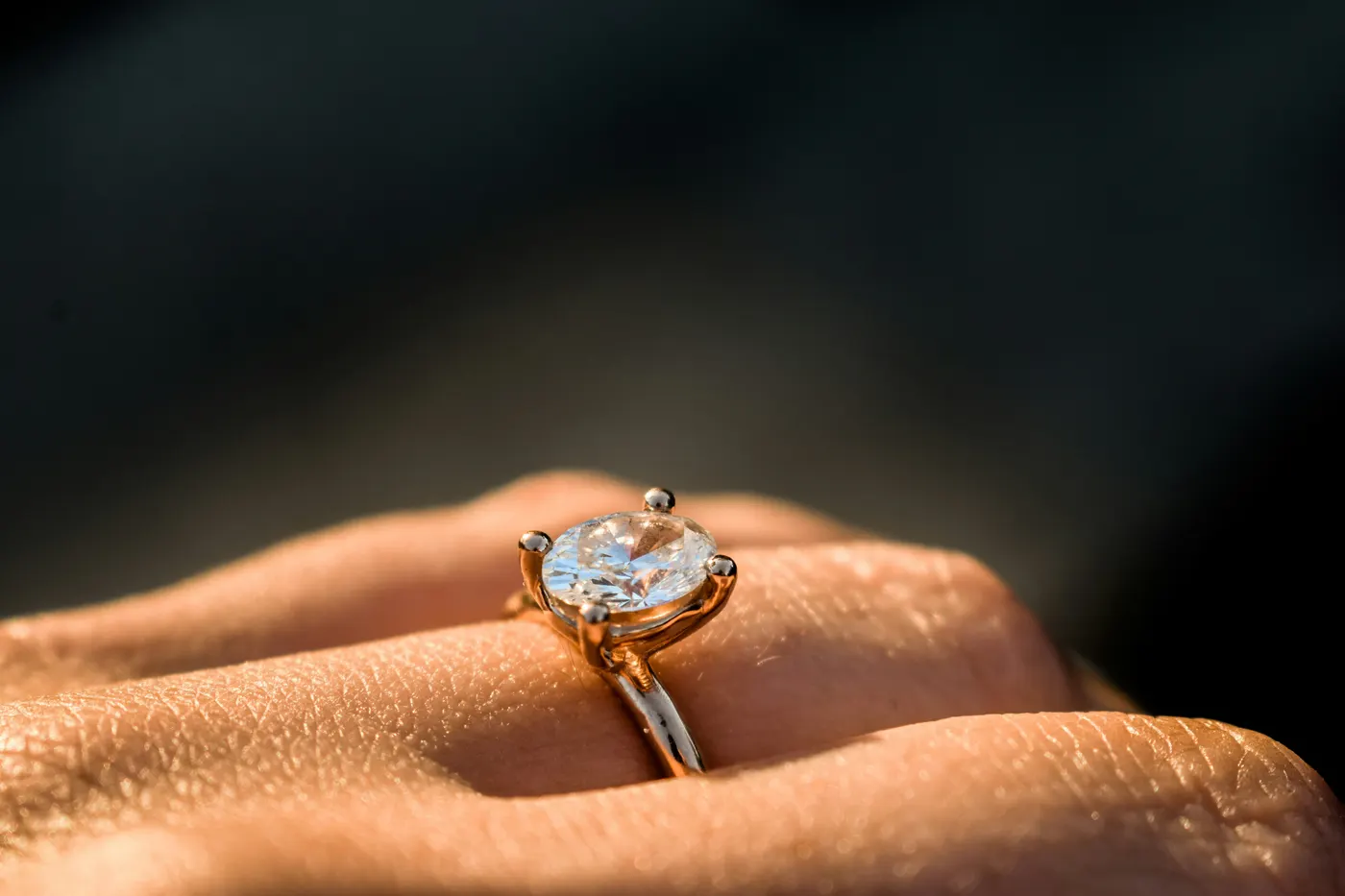
The number of claws matters. Four claws give the stone maximum exposure to light and create a slightly modern, geometric look, the stone appears to float. Six claws are more traditional and offer more security, particularly for round brilliants. The prong shape also varies: round prongs, claw prongs (tapering to a point), and flat prongs each create a different silhouette from above.
The solitaire suits almost every stone shape. It works particularly well with rounds, ovals, and emerald cuts. It is the right choice if you want the stone to be the undisputed focus, if your partner has relatively minimal taste in jewellery, or if you want a ring that will look as considered in 30 years as it does today.
Best for: statement stones, classic taste, longevity of design.
Consider: the shank width and profile matter more here than in any other setting, as the band is the second-most visible element of the ring.
Halo
A halo setting surrounds the centre stone with a ring of smaller diamonds or gemstones. The effect is to make the centre stone appear larger (typically by 0.2–0.5ct equivalent in apparent size) and to add brilliance and presence. At lower budgets, the halo can compensate meaningfully for a smaller centre stone. At higher budgets, it adds a distinct design character.
There are several halo variations worth knowing. A single halo is the most common. A double halo (two concentric rings of smaller stones) is more dramatic and more dated, it peaked in popularity around 2012–2015 and now reads as less current. A floating or detached halo has a small gap between the outer diamond ring and the centre stone, creating a more architectural, modern effect.
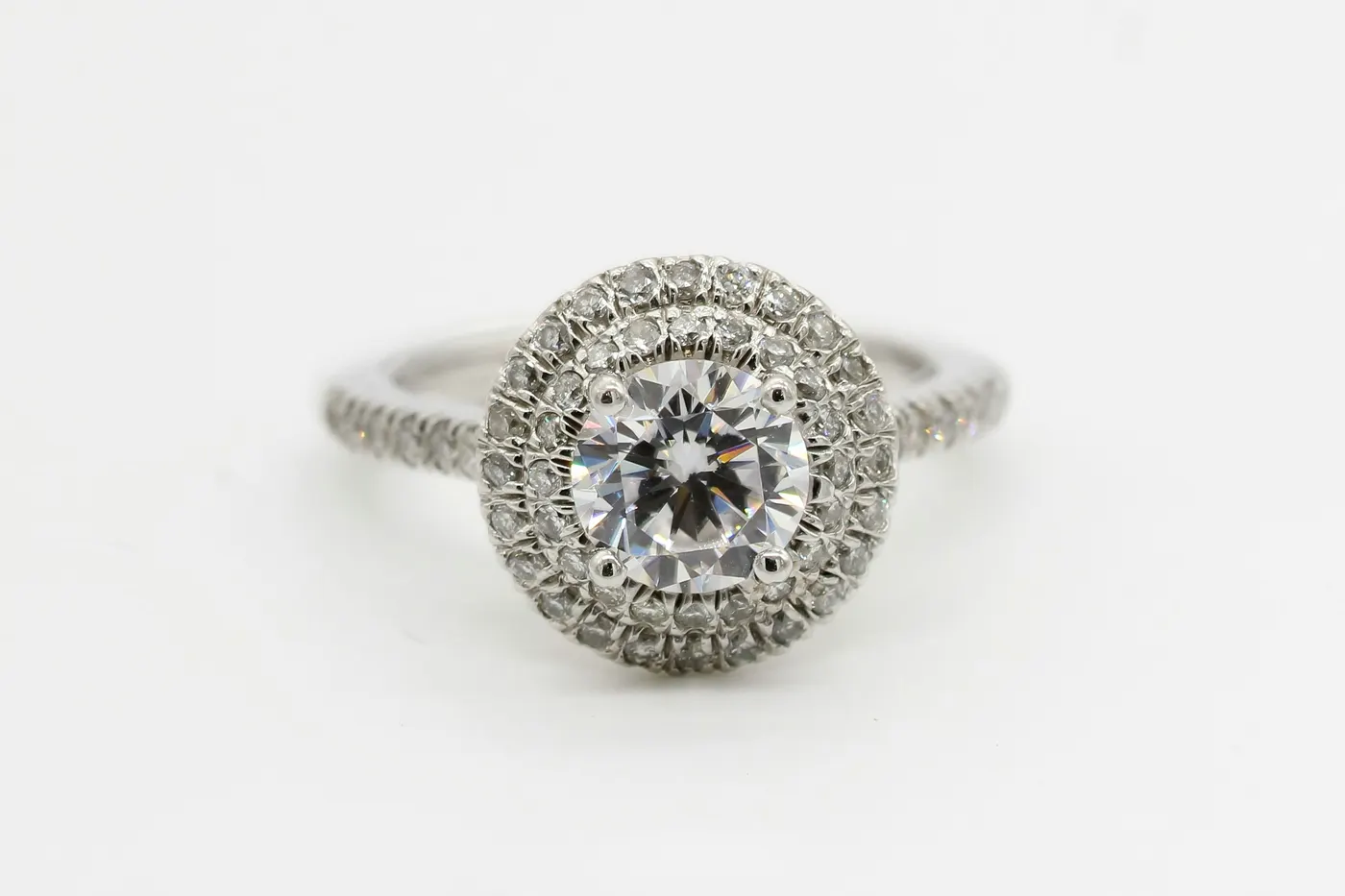
The halo does create some practical considerations. The smaller stones around the perimeter are more vulnerable to catching and snagging than a clean solitaire. They require more regular maintenance (claw checking, cleaning) and the setting is generally harder to resize without affecting the design.
The halo works very well with cushion, oval, and pear-shaped centre stones, where the shape of the surrounding stones can echo and enhance the centre. It can overwhelm a round brilliant if poorly proportioned.
Best for: maximising visual presence within a budget, buyers who prefer an ornate, sparkle-forward aesthetic.
Consider: check the quality and setting of the surrounding stones; poorly set halo stones are a maintenance issue.
Pavé
Pavé (from the French "paved") describes a band set with small diamonds along part or all of its surface, with the metal between them minimised so the diamonds appear to cover the metal almost completely. The effect from a distance is of a band of continuous light and sparkle.
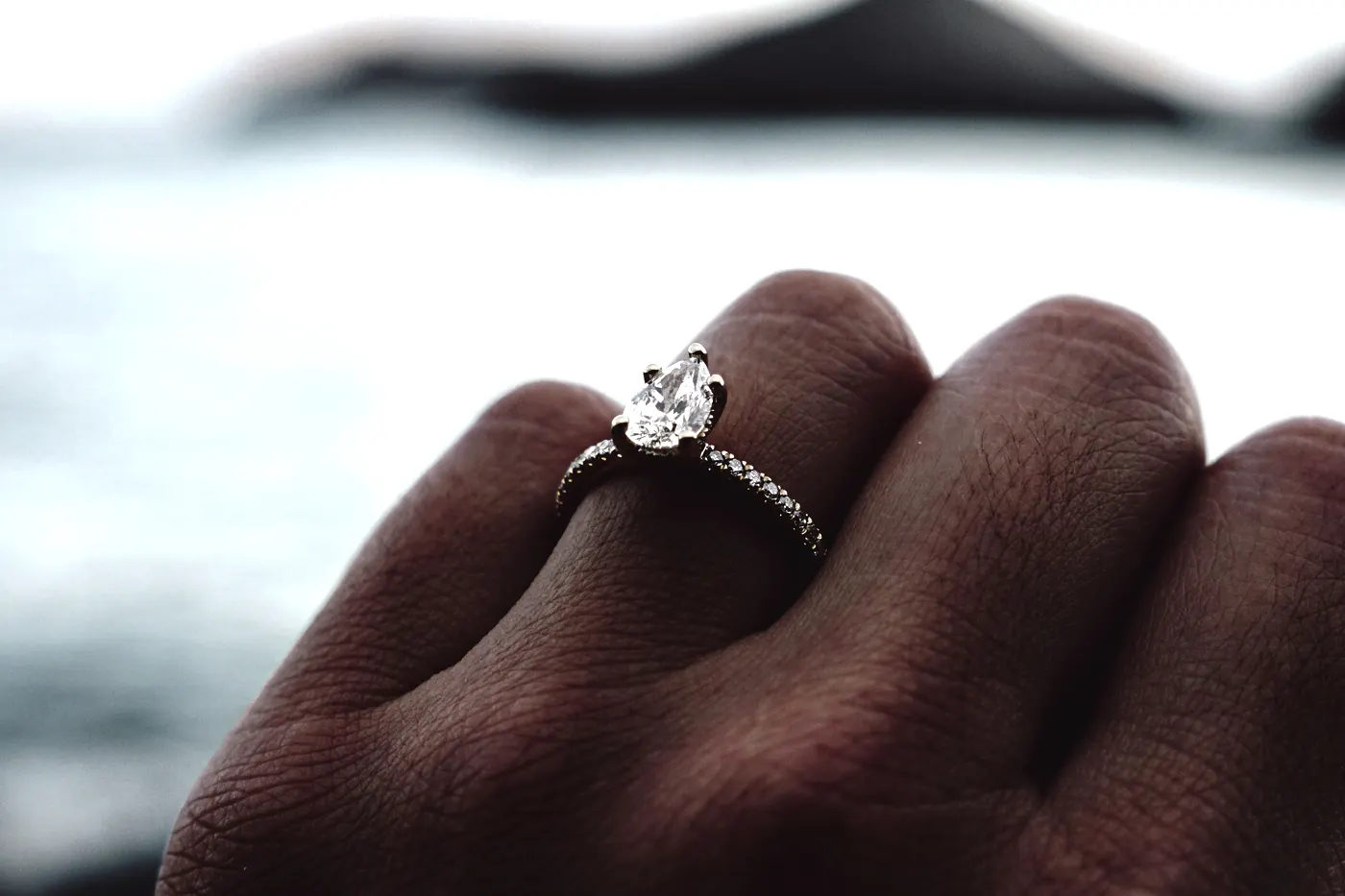
Half pavé (diamonds on the front half of the shank) is more practical than full pavé (diamonds all the way around), which can be uncomfortable when the ring rotates on the finger and the diamonds press into the palm. Full pavé is also significantly harder to resize.
Micro-pavé uses very small stones set even more densely; it creates a more refined, delicate look but requires highly skilled setting work and more frequent maintenance. The quality of the pavé setting, specifically the consistency of stone size, the precision of bead-setting, and the evenness of coverage, varies significantly between jewellers and is a meaningful indicator of craft quality overall.
Pavé suits most centre stone shapes and works particularly well when the centre stone has a soft or rounded profile (round, oval, cushion), where the flowing brilliance of the band complements the stone's character. It contrasts well with a step-cut centre (emerald or Asscher), where the stone's geometric clarity is offset by the band's sparkle.
Best for: buyers who want the ring to sparkle throughout, not just at the centre.
Consider: budget for regular professional cleaning and claw checking. Pavé requires more maintenance than plain metal bands.
Bezel
A bezel setting encircles the stone completely in a rim of metal, which holds it in place without any claws. The result is clean, minimal, and extremely secure. The stone cannot catch on fabric or be knocked out of place. For buyers with active lifestyles, professions that involve physical work, or who simply prefer the aesthetic of clean metalwork over exposed claws, the bezel is an underrated choice.
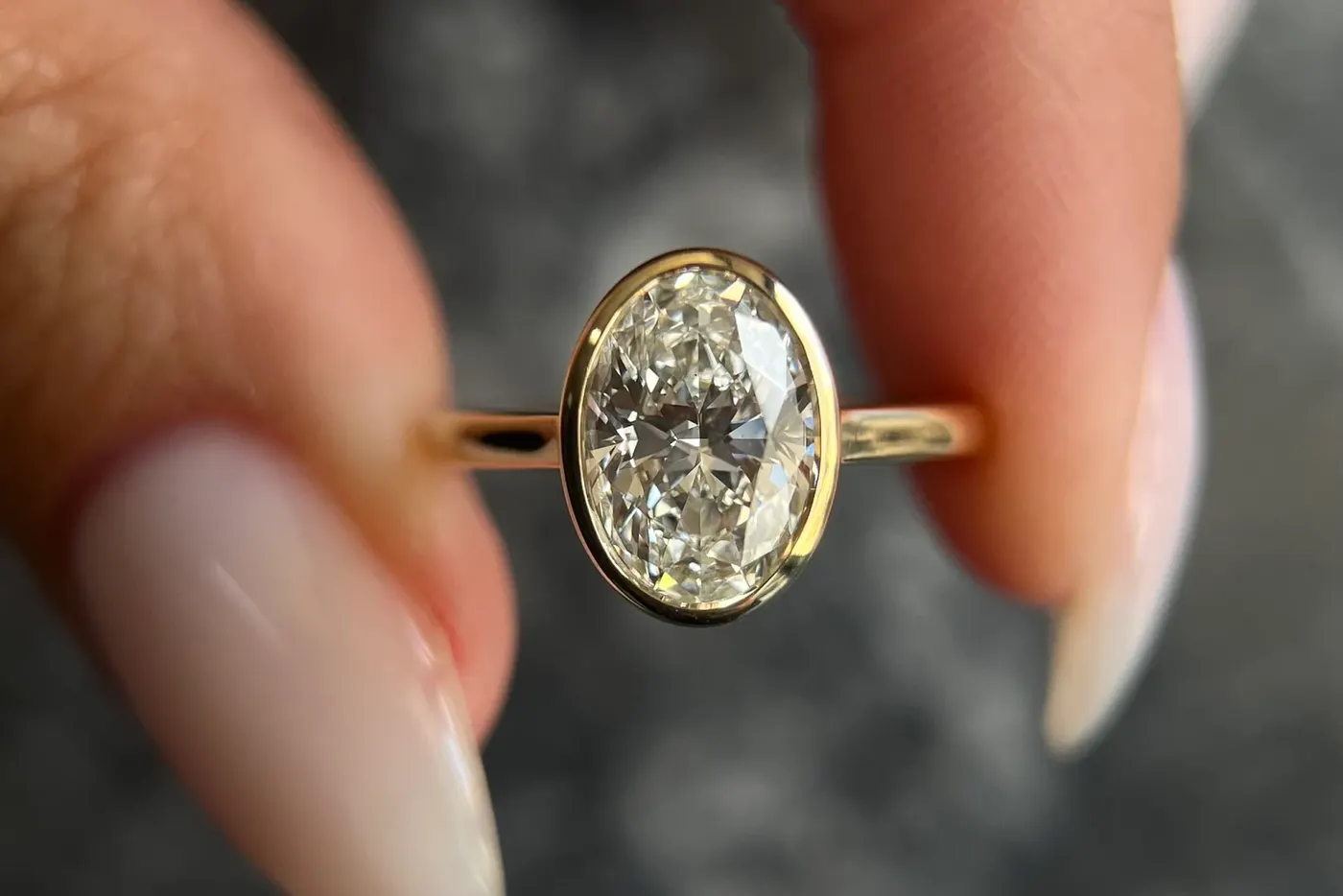
The trade-off is light. A bezel setting covers the girdle of the stone and reduces the amount of light entering and exiting from the sides. Round brilliants lose some of their fire in a bezel setting; step-cut stones (emerald, Asscher) lose less because their character relies less on returning light from the sides. Lab-grown diamonds, which already have excellent optical properties, fare well in bezels.
A partial bezel (also called a semi-bezel) covers part of the stone (typically the sides) while leaving the top and bottom exposed. This offers more light return than a full bezel while still providing substantial protection.
The bezel works exceptionally well with coloured stones, particularly softer stones like emeralds that benefit from additional protection. It also suits oval and round shapes particularly well.
Best for: active wearers, buyers who prefer minimal design, coloured or softer stones.
Consider: the quality of the bezel edge work (it should be smooth and even) is one of the clearest indicators of a skilled goldsmith.
Channel Set
Channel setting runs smaller stones along the inside of a groove (the "channel") in the band, with no claws holding them, the metal edges of the channel secure each stone on either side. The result is a smooth, flush band where the stones sit level with the metal surface, creating no snagging risk.
Channel settings are most commonly found on wedding bands rather than engagement ring solitaires, but a channel-set engagement ring, with a row of equal-sized diamonds running along the band rather than a single centre stone, is a distinctive alternative for buyers who prefer understated, wearable rings without a prominent raised stone.
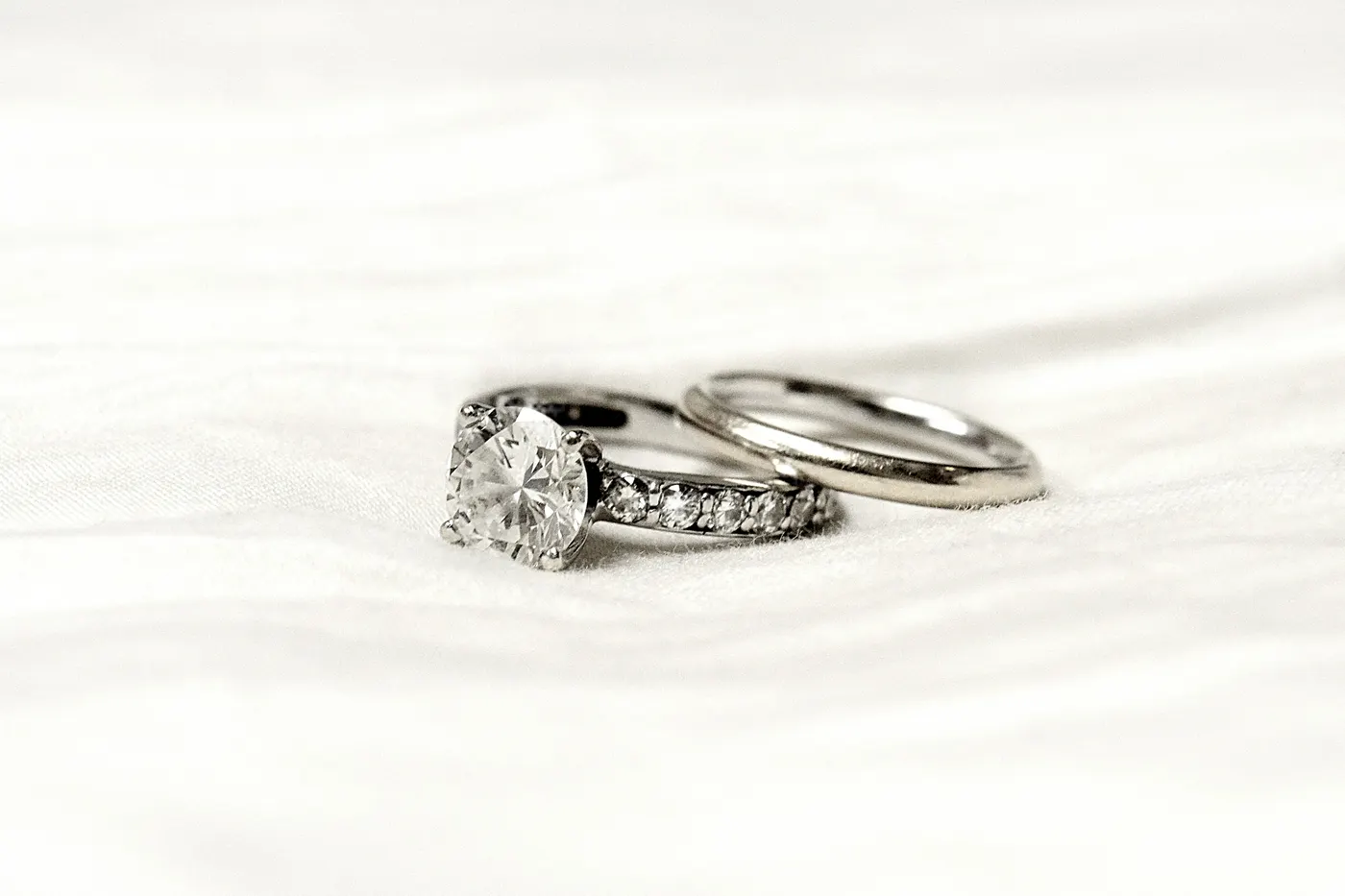
The limitation of channel setting is that resizing is difficult to impossible without affecting the channel. Plan size carefully if choosing this style.
Best for: buyers who want sparkle without a raised centre stone, active wearers, those stacking with other bands.
Tension Setting
A tension setting suspends the stone between the two ends of the shank using the spring pressure of the metal, with no claws or bezel. The effect is dramatic: the stone appears to float, with light entering from all sides. It is one of the most striking contemporary engagement ring designs.
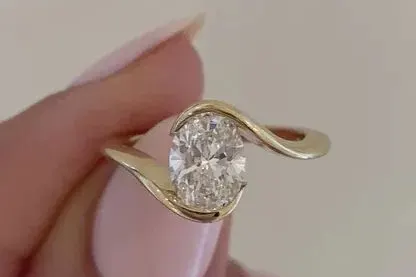
The tension setting is also the most demanding of the jeweller. The metalwork must be precise and the metal itself must have sufficient tension to hold the stone securely. It is not a setting suited to every jeweller or every stone. Poorly executed tension settings are a security risk; well-executed ones are extremely durable.
Not every stone suits a tension setting. Round brilliants and ovals are most commonly done well in this style. It is not appropriate for softer or more fragile stones.
Best for: buyers who want a genuinely distinctive, contemporary ring and are working with a jeweller who specialises in the form.
Consider: ask specifically about the metal grade and the security testing process before commissioning a tension setting.
How to Choose
Three questions simplify the decision considerably.
What lifestyle does the ring need to support? A nurse, a rock climber, or someone who works with their hands benefits from a bezel or low-profile solitaire. A professional who mostly wears the ring to meetings and evenings can consider more elaborate settings.
What does the stone need? A beautiful, well-cut stone deserves a solitaire that shows it clearly. A smaller stone might benefit from a halo. A coloured stone might need the protection of a bezel. Let the stone guide the setting, not the other way around.
What does she actually wear? Look at her existing jewellery. Minimal, delicate pieces suggest a solitaire or fine pavé. Layered, ornate pieces suggest she may appreciate a more elaborate setting. If in doubt, simpler holds its appeal longer.
For stone selection, our stone shape guide covers every cut in detail. For the full buying process, the bespoke consultation guide walks you through how to find and work with the right jeweller in London.
More Guides
Stone Shape Guide
Every shape from round to pear, with honest notes on what each one looks like in person.
Read guide → PracticalBespoke Consultation Questions
What to prepare and what to ask before sitting down with a London jeweller.
Read guide → FoundationUnderstanding the 4Cs
Cut, colour, clarity and carat: the framework every buyer needs before they shop.
Read guide →Beyond the Diamond
Sapphires, emeralds, rubies and moissanite: often the most personal choice of all.
Read nextOr go straight to the Hatton Garden visit planner or the Top 100.